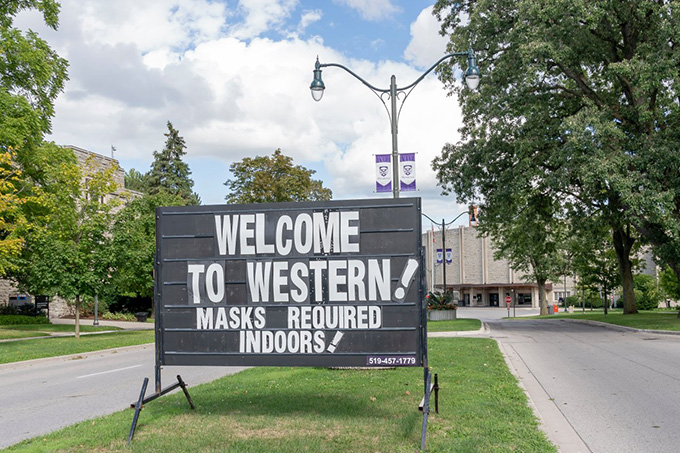
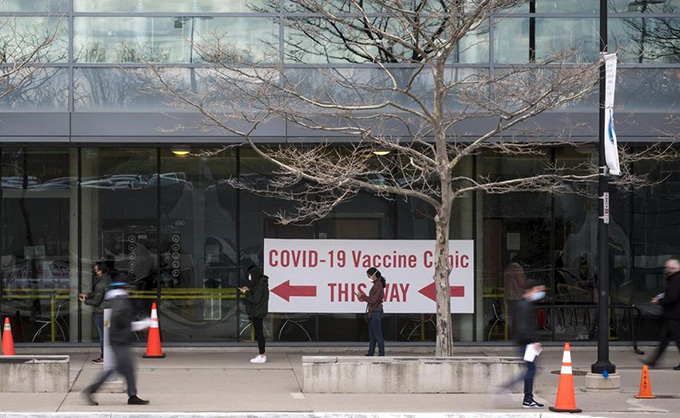
 In the United States, more than 600 institutions of higher education are requiring students to be vaccinated to return to campus this fall.
In Canada, Seneca College in Ontario is making vaccination mandatory for anyone attending campus. The University of Ottawa and others will require students living on campus to be vaccinated.
The University of Toronto has announced that in addition to requiring vaccination for students living in residence, it will “require students, faculty, staff and librarians who participate in activities that carry a higher risk of COVID-19 transmission to be vaccinated — and require all community members to self-declare their vaccination status” on an online platform. The university will use “anonymous, aggregate data on vaccination status, by campus,” to inform health and safety measures.
As September approaches, more post-secondary institutions will announce how they are managing COVID-19-related decisions.
We are two researchers with an interest in social and structural determinants of health who have been discussing and writing about the pandemic for the last 16 months.
We are involved in research about increasing COVID-19 knowledge and protective behaviours, and reducing pandemic stress among diverse LGBTQ+ and racialized people, and how harm-reduction programs for people who use drugs, and other addiction services and HIV prevention have changed in response to COVID-19.
While one of us is more supportive of mandatory vaccination on campuses — given voluminous evidence for COVID-19 vaccine safety and effectiveness — we are both nevertheless concerned about mandatory vaccination.
In the United States, more than 600 institutions of higher education are requiring students to be vaccinated to return to campus this fall.
In Canada, Seneca College in Ontario is making vaccination mandatory for anyone attending campus. The University of Ottawa and others will require students living on campus to be vaccinated.
The University of Toronto has announced that in addition to requiring vaccination for students living in residence, it will “require students, faculty, staff and librarians who participate in activities that carry a higher risk of COVID-19 transmission to be vaccinated — and require all community members to self-declare their vaccination status” on an online platform. The university will use “anonymous, aggregate data on vaccination status, by campus,” to inform health and safety measures.
As September approaches, more post-secondary institutions will announce how they are managing COVID-19-related decisions.
We are two researchers with an interest in social and structural determinants of health who have been discussing and writing about the pandemic for the last 16 months.
We are involved in research about increasing COVID-19 knowledge and protective behaviours, and reducing pandemic stress among diverse LGBTQ+ and racialized people, and how harm-reduction programs for people who use drugs, and other addiction services and HIV prevention have changed in response to COVID-19.
While one of us is more supportive of mandatory vaccination on campuses — given voluminous evidence for COVID-19 vaccine safety and effectiveness — we are both nevertheless concerned about mandatory vaccination.
Avoid ‘battleground’ scenario Our shared experience in social work, public health and ethics, including sexual health and HIV research, leads us to believe that mandating vaccination can risk turning a highly effective and routine public health intervention into a contentious battleground. What otherwise might be an everyday health behaviour becomes increasingly loaded with stereotypes and assumptions about political motivations that can divide communities and marginalize individuals and their lived experiences. Our research has shown us that reasons for engaging in practices often not condoned by health researchers and public health officials — such as sharing drug-using equipment — are often complex. And they often make sense in the context of people’s daily realities. In the case of people living with HIV and people who use drugs, they often have sophisticated understandings and complex interactions with the health-care system. These communities often have innovative ideas about how to better meet the needs of their peers.#UofT to require vaccination for high-risk activities, self-declaration of vaccination status https://t.co/zvvlpLkUAU pic.twitter.com/RzPkyYxQkC
— University of Toronto (@UofT) July 29, 2021
Mandatory in public sectors?
The great success of COVID-19 vaccines has led to calls to make them mandatory for health-care workers, for elementary and high-school staff, and in other public sectors. We have personally followed public health requirements and have been vaccinated. We also recognize that vaccines have been the most impactful public health intervention of the last century. Vaccines save millions of lives every year. But we also understand that while everyone who lacks antibodies to new coronavirus strains is at risk, the risks of infection, morbidity and mortality are influenced by broader socio-political and economic systems. In this way, COVID-19, like many other infectious diseases that concern public health experts, is rooted in inequity.Social contexts, inequities
The COVID-19 pandemic has exacerbated pre-existing inequalities among racialized (“visible minority”) communities because of systemic racism in the health-care system, workplaces and living conditions. Communities that experience the brunt of systemic racism and ongoing colonization, including in the health-care system, may be understandably reluctant or hesitant to get vaccinated. Black and Indigenous communities are navigating especially painful histories with harmful state-sponsored medical interventions. Engaging these communities about vaccination requires cultural humility and respect. Some people have medical reasons to not get vaccinated, such as allergies. Others may have religious reasons. Then there are those considered “anti-vaxxers,” who reject vaccinations despite the evidence for their safety and efficacy. In Canada, 70 per cent of the population has received at least one vaccine dose. Fifty-six per cent are fully vaccinated.