 Higher education in the United States is in trouble. Spiraling tuition costs and a student debt crisis threaten to make college unaffordable to all but the wealthy.
In an attempt to cut spending and control tuition hikes, American universities are relying more and more on temporary instructors who are underpaid, teach a heavy course load and often lack job security and health insurance.
Many schools are also increasing class sizes and moving courses online in order to lower costs. And students are not happy: Online learning is less popular than in-person instruction, and dissatisfaction has only increased during the pandemic.
On top of these problems, universities in the U.S. and other parts of the world are challenged by apprenticeship and boot-camp initiatives that question the relationship between the formal academic credentials a college gives and real-world success.
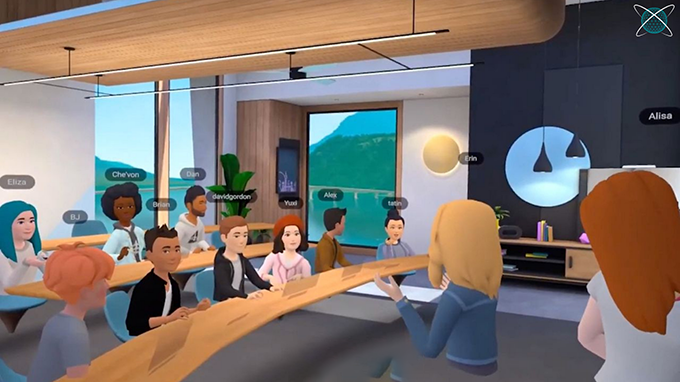
The metaverse – a series of emerging virtual and augmented reality technologies that will offer a more immersive experience than the current internet – may help universities solve some of these problems and revolutionize the experience of remote learning.
But as my colleagues and I at UMass Boston’s Applied Ethics Center have found through our research, solving one set of problems through artificial intelligence, or AI, and other technologies often creates another set of problems.
We’ve found that AI has the potential to weaken people’s capacity to make ordinary judgments about matters that include mundane things, such as what movie to watch, as well as more weighty decisions, such as who should get a promotion at work. We’ve also found that it undermines the role of serendipity – that is, the chance encounters and other unexpected events that you experience in the real world – and can undermine people’s belief in the importance of human rights.
Will the metaverse bring better news for higher education? Potentially. But to build flourishing universities in the metaverse, computer engineers, higher education leaders and policymakers will have to solve some difficult problems. Here are five challenges that I view as the most urgent to address.
Higher education in the United States is in trouble. Spiraling tuition costs and a student debt crisis threaten to make college unaffordable to all but the wealthy.
In an attempt to cut spending and control tuition hikes, American universities are relying more and more on temporary instructors who are underpaid, teach a heavy course load and often lack job security and health insurance.
Many schools are also increasing class sizes and moving courses online in order to lower costs. And students are not happy: Online learning is less popular than in-person instruction, and dissatisfaction has only increased during the pandemic.
On top of these problems, universities in the U.S. and other parts of the world are challenged by apprenticeship and boot-camp initiatives that question the relationship between the formal academic credentials a college gives and real-world success.
The metaverse – a series of emerging virtual and augmented reality technologies that will offer a more immersive experience than the current internet – may help universities solve some of these problems and revolutionize the experience of remote learning.
But as my colleagues and I at UMass Boston’s Applied Ethics Center have found through our research, solving one set of problems through artificial intelligence, or AI, and other technologies often creates another set of problems.
We’ve found that AI has the potential to weaken people’s capacity to make ordinary judgments about matters that include mundane things, such as what movie to watch, as well as more weighty decisions, such as who should get a promotion at work. We’ve also found that it undermines the role of serendipity – that is, the chance encounters and other unexpected events that you experience in the real world – and can undermine people’s belief in the importance of human rights.
Will the metaverse bring better news for higher education? Potentially. But to build flourishing universities in the metaverse, computer engineers, higher education leaders and policymakers will have to solve some difficult problems. Here are five challenges that I view as the most urgent to address.
College could take place in the metaverse, but these problems must be overcome first
- Share:
I dont km
Higher education in the United States is in trouble. Spiraling tuition costs and a student debt crisis threaten to make college unaffordable to all but the wealthy.
In an attempt to cut spending and control tuition hikes, American universities are relying more and more on temporary instructors who are underpaid, teach a heavy course load and often lack job security and health insurance.
Many schools are also increasing class sizes and moving courses online in order to lower costs. And students are not happy: Online learning is less popular than in-person instruction, and dissatisfaction has only increased during the pandemic.
On top of these problems, universities in the U.S. and other parts of the world are challenged by apprenticeship and boot-camp initiatives that question the relationship between the formal academic credentials a college gives and real-world success.
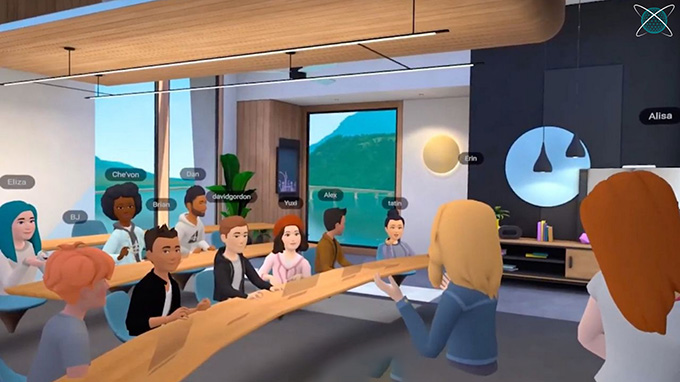
The metaverse – a series of emerging virtual and augmented reality technologies that will offer a more immersive experience than the current internet – may help universities solve some of these problems and revolutionize the experience of remote learning.
But as my colleagues and I at UMass Boston’s Applied Ethics Center have found through our research, solving one set of problems through artificial intelligence, or AI, and other technologies often creates another set of problems.
We’ve found that AI has the potential to weaken people’s capacity to make ordinary judgments about matters that include mundane things, such as what movie to watch, as well as more weighty decisions, such as who should get a promotion at work. We’ve also found that it undermines the role of serendipity – that is, the chance encounters and other unexpected events that you experience in the real world – and can undermine people’s belief in the importance of human rights.
Will the metaverse bring better news for higher education? Potentially. But to build flourishing universities in the metaverse, computer engineers, higher education leaders and policymakers will have to solve some difficult problems. Here are five challenges that I view as the most urgent to address.
Higher education in the United States is in trouble. Spiraling tuition costs and a student debt crisis threaten to make college unaffordable to all but the wealthy.
In an attempt to cut spending and control tuition hikes, American universities are relying more and more on temporary instructors who are underpaid, teach a heavy course load and often lack job security and health insurance.
Many schools are also increasing class sizes and moving courses online in order to lower costs. And students are not happy: Online learning is less popular than in-person instruction, and dissatisfaction has only increased during the pandemic.
On top of these problems, universities in the U.S. and other parts of the world are challenged by apprenticeship and boot-camp initiatives that question the relationship between the formal academic credentials a college gives and real-world success.
The metaverse – a series of emerging virtual and augmented reality technologies that will offer a more immersive experience than the current internet – may help universities solve some of these problems and revolutionize the experience of remote learning.
But as my colleagues and I at UMass Boston’s Applied Ethics Center have found through our research, solving one set of problems through artificial intelligence, or AI, and other technologies often creates another set of problems.
We’ve found that AI has the potential to weaken people’s capacity to make ordinary judgments about matters that include mundane things, such as what movie to watch, as well as more weighty decisions, such as who should get a promotion at work. We’ve also found that it undermines the role of serendipity – that is, the chance encounters and other unexpected events that you experience in the real world – and can undermine people’s belief in the importance of human rights.
Will the metaverse bring better news for higher education? Potentially. But to build flourishing universities in the metaverse, computer engineers, higher education leaders and policymakers will have to solve some difficult problems. Here are five challenges that I view as the most urgent to address.
