 The need to belong is fundamental in the development of human beings. For the smallest humans, this need takes the form of having companions for learning, playing games and, somewhat later, friends.
But for some girls and boys, this does not work and they are systematically excluded from group relationships. His companions prefer to be with other members of the group, and even explicitly prefer not to do things with them. Research has confirmed that there is a high rate of boys and girls who throughout their schooling are rejected by their peers, with small variations throughout schooling, and very unequally in boys and girls (boys are more rejected than girls).
In our own data we find rejection rates between 12% and 16%, making it very unlikely to find a classroom without any rejections. In fact, around 75% of the classrooms have at least 3 rejected students.
The need to belong is fundamental in the development of human beings. For the smallest humans, this need takes the form of having companions for learning, playing games and, somewhat later, friends.
But for some girls and boys, this does not work and they are systematically excluded from group relationships. His companions prefer to be with other members of the group, and even explicitly prefer not to do things with them. Research has confirmed that there is a high rate of boys and girls who throughout their schooling are rejected by their peers, with small variations throughout schooling, and very unequally in boys and girls (boys are more rejected than girls).
In our own data we find rejection rates between 12% and 16%, making it very unlikely to find a classroom without any rejections. In fact, around 75% of the classrooms have at least 3 rejected students.
Dislike, common experience
Most of us are not liked by everyone, we may even be the focus of active rejection by some people, so dislikes and rejections are part of everyday interpersonal and group dynamics. Once again , our data clearly shows that the exchange of dislikes or negative affects between classmates is a common adverse experience from the beginning of schooling. Thus, in previous studies we have found that 96% of boys and girls aged 6–7 years negatively point out a classmate and 86% of boys and girls are negatively pointed out at least once by another classmate.Chronic rejection and its effects
Despite the fact that rejection is a difficult part of our relationships, when it becomes chronic, it becomes one of the most important predictors of psychological, social and academic maladjustment for those who suffer from it. Studying rejection and its evolution is complicated for various reasons. The first is that accessing negative information may involve asking sensitive questions, which is not always easy. But perhaps the fundamental one is that in our society there is a strong positive bias on relationships, forgetting the most negative aspects of personal exchanges, such as dislikes between equals, that is: situations in which two people do not like each other or he doesn’t like the other. The result of people being less willing to express or share negative information, or expressing it in settings less accessible to the rejected, is that less information is available about negative attitudes or relationships. All this means that situations of rejection generally have a covert character. Thus, we have found that 95% of children between the ages of 6 and 7 make some type of error in identifying their rejecters and that half fail to discover who they are. This situation seems to persist over time, given that around half of the fourth-year rejecters believe that the classmates they do not like are unaware of it and that, in a certain way, this happens because they hide it.Why don’t I like it?
But why do certain boys and girls not like it? What do they have in common? Or perhaps a more appropriate question is: what has happened so that the group does not want them? A quick and intuitive response would be to think that something is wrong with them. From this theory of characteristics , it is pointed out that there are traits that are considered desirable in themselves, such as empathy or prosociality, which would be reasons for acceptance, and that there are others, such as aggressiveness and withdrawal, that are not considered desirable and which will be grounds for rejection. The accent is placed, then, on the behavior of the rejected people. A somewhat more complex answer would focus on the fact that preferences or rejections are made on the basis of the cost-benefit that it has for those who make the decision. In this case, the focus would be on the interpretation that the rejecters make of the rejected person’s behavior in terms of costs for himself or for his group. In addition to this objective assessment of behavior by the group, there is also evidence that we like people with characteristics similar to our own. This search for similarities also extends to groups, identifying us with different characteristics, such as gender (“girls” versus “boys”). This last theory proposes, in turn, that dissimilarity leads to dislike.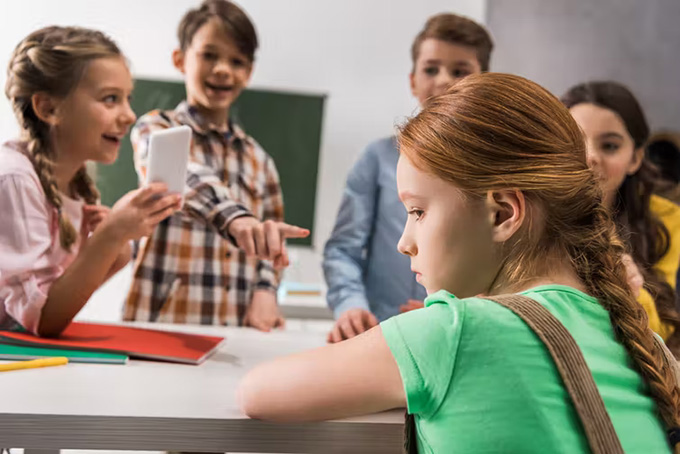
Shutterstock / LightField Studios
